
What is an IB School?
An IB school is a school that offers the International Baccalaureate (IB), a globally recognised curriculum and approach to education that is designed to develop curious, capable and internationally minded students. Rather than focusing only on academic outcomes, an IB education encourages students to think critically, ask meaningful questions and make connections across subjects and cultures.
At its heart, an IB school is about more than examination success. It is about helping young people grow into confident learners, thoughtful collaborators and responsible global citizens, equipped for university, work and life in a fast-changing world.
Key features of an IB school
A global outlook
One of the defining characteristics of an IB school is its international mindset. Students are encouraged to understand different cultures, perspectives and ideas, helping them develop the confidence to thrive in an interconnected world.
A rigorous academic framework
The IB is known for being both broad and challenging. It is designed to stretch students intellectually while also helping them become more independent, reflective learners so that they are best prepared for a fast-changing world.
Holistic development
IB schools focus on developing the whole child. Academic achievement is important, but so too are creativity, physical wellbeing, emotional development, leadership and a sense of service. Service Learning (community volunteering), for example, is embedded across all IB programmes.
Inquiry-lead learning
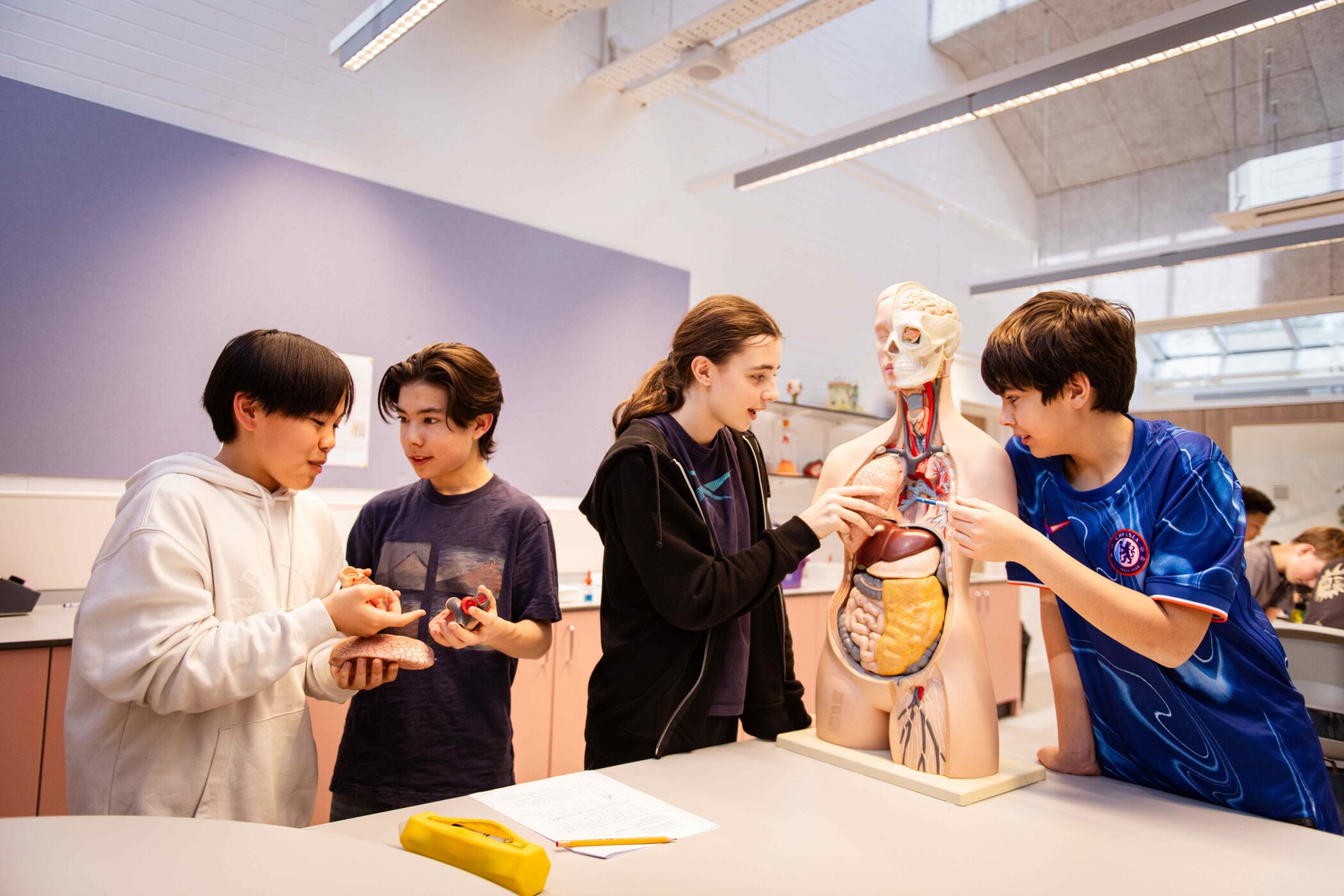
An IB classroom is built around curiosity. Students are encouraged to question, research and think deeply, rather than simply memorise facts.
Preparation for the future
With a core focus on communication, cultural understanding and real-world problem solving, IB schools help students prepare for life beyond school, whether that means university in the UK or overseas, or a globally mobile career.
A supportive learning community
Strong IB schools create environments where students feel known, supported and inspired. Teachers guide and challenge students, while families are part of a wider community built on shared values and mutual respect.
The IB Programmes
IB Primary Years Programme (PYP)
The PYP encourages younger students to become curious, confident and independent learners. Through an inquiry-led approach, students explore meaningful questions and make connections between different areas of learning.
IB Middle Years Programme (IBMYP)
The MYP builds on students’ curiosity by encouraging them to think critically and connect what they learn in the classroom with the wider world. Students study across a broad range of subjects while developing research, communication and problem-solving skills.
IB Diploma Programme (IBDP)
The DP is a challenging, internationally recognised programme that combines academic breadth with in-depth study. Alongside six subject groups, students complete the DP core: Theory of Knowledge (TOK), the Extended Essay (EE), and Creativity, Activity, Service (CAS).
IB Career-related Programme (IBCP)
The IB
In stats
5700+
IB World Schools worldwide
160+
countries include the IB
2+ million
students globally follow the IB


Why families choose an IB education
Families are often drawn to IB schools, such as ACS International Schools, because they want an education that is academically strong, but also broader in purpose.
An IB education can appeal to families looking for:
-
a curriculum with global relevance
-
strong preparation for university
-
an emphasis on independent thinking
-
a values-led approach to learning
-
opportunities for personal growth beyond the classroom
-
global mobility and continuity in learning
What this looks like in practice
At ACS, we offer all four programmes at our Egham campus, with the IBDP and IBCP available at ACS Cobham and ACS Hillingdon.
Alongside its academic framework, the IB is guided by the IB Learner Profile, a set of attributes that shape how students learn and grow. Students are encouraged to be curious, thoughtful and confident communicators, while also developing integrity, open-mindedness and resilience. Together, these qualities ensure learning is not just about knowledge, but about the kind of individuals they become.

The ACS approach to an IB education
At ACS, IB education is shaped by deep experience, expert teaching and a truly inclusive international environment.
We have more than 50 years of experience teaching the IB, with many teachers also serving as IB examiners. That means students benefit from an education that is ambitious, supportive and future-focused, helping them build the knowledge, skills and confidence to succeed on a global stage.