

27/08/2026
Do Students Need GCSEs? How ACS Hillingdon Prepares Students for University
What does it mean to prepare a young person not simply for their next set of examinations, but for university and the world beyond?
Building strong academic foundations in Grades 9 and 10
At ACS Hillingdon, that journey begins well before students make decisions about their final qualifications. Throughout Grades 9 and 10 (Years 10 and 11), our international approach develops strong subject knowledge alongside the attributes of the IB Learner Profile: encouraging students to become knowledgeable, inquisitive, reflective and open-minded, and to grow as confident communicators and critical thinkers.
Rather than working towards a full programme of GCSE examinations, students build strong academic foundations across a broad curriculum. Regular assessment helps us understand their progress, identify areas for development and ensure they are appropriately challenged. This includes a combination of formative and summative assessment throughout each unit, from class tests and essays to projects and presentations, with progress tracked against clear, internationally accepted academic standards.
Choosing the right pathways in Grades 11 and 12
As students move into Grades 11 and 12 (Years 12 and 13), that foundation opens up choice. Rather than following a single prescribed route, students can select the senior pathway that best matches their strengths, interests and future ambitions. At ACS Hillingdon, this includes the IB Diploma Programme (IBDP), IB Career-related Programme (IBCP) and the ACS Global Pathway, with opportunities to study a broad range of rigorous courses, including Advanced Placement (AP, college level courses which can give students credits at some universities.
Across these pathways, students continue to develop academically beyond GCSE level. For most ACS students, a full suite of GCSE qualifications is therefore unnecessary. Where a student requires an English or Mathematics GCSE for a specific future pathway, we can support them in preparing for those examinations.
Developing skills for university and beyond
But the ACS journey is about more than the qualifications students ultimately receive. From Grade 9 onwards, students are increasingly expected to ask questions, research independently, think critically, communicate their ideas and apply their learning in new contexts. By the time they graduate, these are not simply skills they have practised for an examination; they are established habits of learning.
Why one family chose the IB pathway
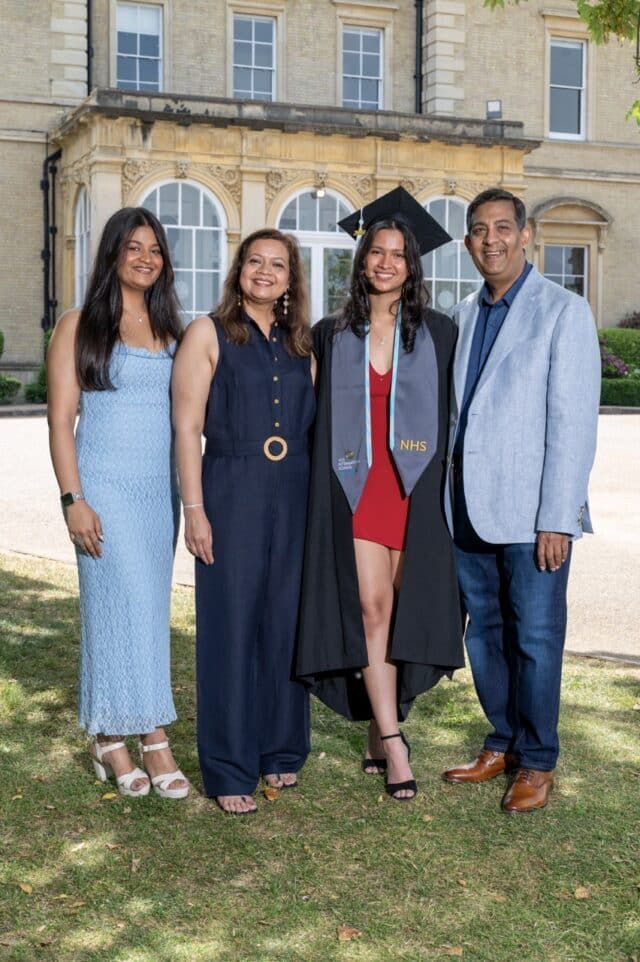
Malih’s journey is one example of what this can look like.
His mum explains: We had the choice of the British, French or international system, and as our son plans to study at a UK university, we liked that the IB is widely recognised and respected by UK universities. We chose the IB over A-Levels because of the wider range of subjects, and we feel that not following the traditional GCSE route has helped him become a more independent and curious learner, supported by the school’s focus on the whole student, critical thinking and open-mindedness. Our son is thriving!
For families considering an international education, this is an important distinction. The ACS pathway is not defined by the qualifications students don’t take. It is defined by what students learn, the choices available to them, and the young people they become: capable, curious and independent learners, ready for university and an increasingly international world.
– Sadie Lovell, Assistant Head of School, in charge of Upper School